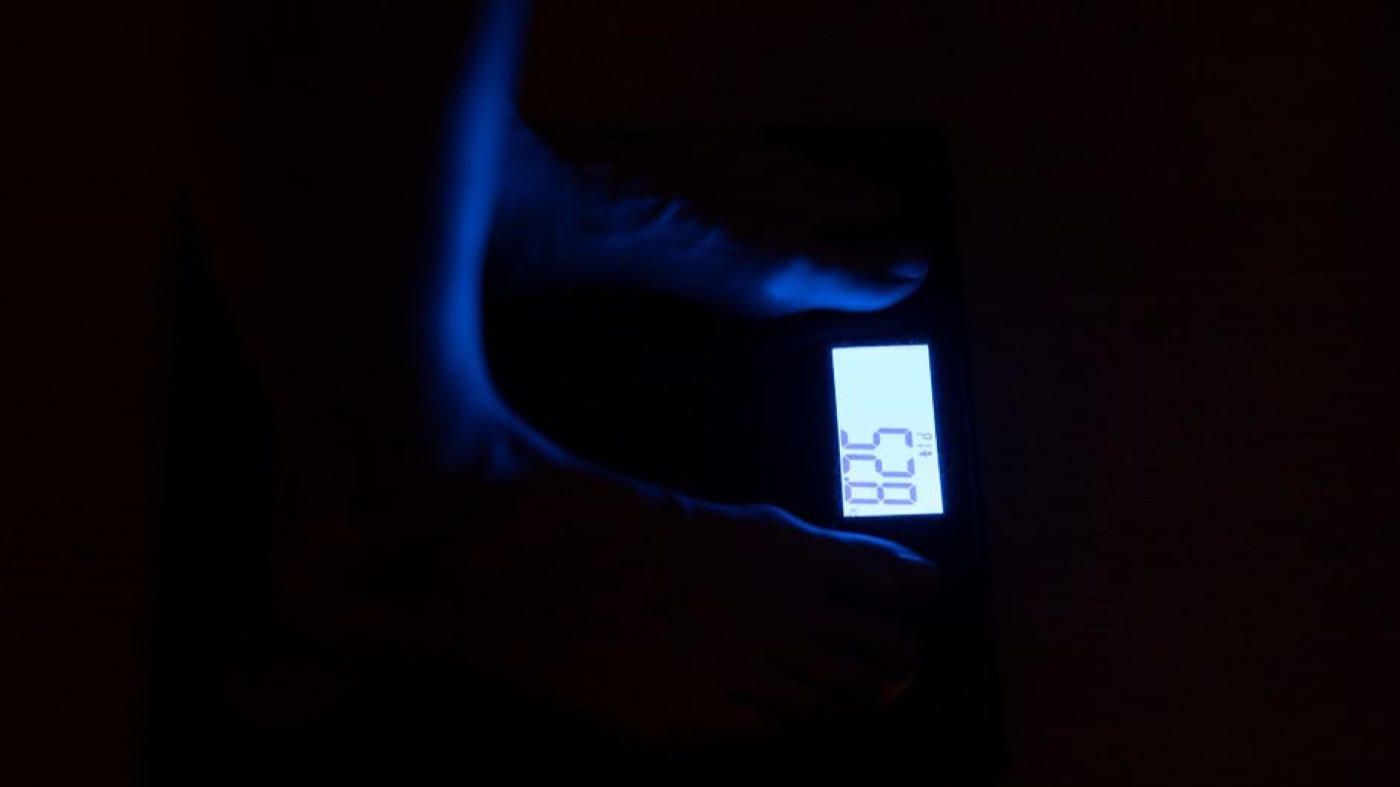
The scale measures the wrong thing
Your weight is the sum of muscle, fat, bone and water. Two people at the same number can be in completely different health. What matters is how much muscle you are holding and where the fat is sitting.
Read the full explanation →
What we measure instead
- Body composition rather than weight alone
- Visceral fat, measured directly rather than estimated
- Lean muscle mass, and whether you are holding it
- Fasting glucose, HbA1c and lipids
- Markers of insulin resistance
What actually protects you
- Protein at a genuinely adequate intake
- Resistance training two or three times a week
- Seven to nine hours of sleep
- Fiber, where most people fall well short
- Medication when it is appropriate, inside a plan that protects muscle
How we actually measure it: the InBody scale
A regular scale gives you one number, and that number is the sum of muscle, fat, bone and water. It cannot tell you which one changed. Lose five pounds of muscle and gain three of fat, and the scale congratulates you.
The scale at Peri Health & Hormones is an InBody, a medical-grade body composition analyzer. You stand on it holding two handles, and in about a minute it passes a series of harmless electrical signals through the body. Muscle, fat and water each conduct differently, so it can separate them: lean muscle mass by body segment, body fat percentage, visceral fat around the organs, and water balance. No radiation, no needles, nothing to prepare for.
The gold standard for body composition is a DEXA scan, which uses low-dose X-rays at an imaging center. DEXA is more precise on a single measurement, and it also reads bone density, which the InBody cannot. But the InBody tracks the same trends closely, takes a minute instead of an appointment, costs nothing extra, and can be repeated at every visit. In practice that is the more useful tool: what protects you is not one perfect measurement, it is watching the trend, fat falling while muscle holds. When bone density itself is the question, DEXA is still the right test and I will send you for one.
The advent of GLP-1 medications
The food industry has a name for what it is doing to you. It is called the bliss point: the exact combination of sugar, salt and fat that maximizes craving, and companies spend millions of dollars and years of testing to find it for every product on the shelf. That mixture, tuned down to the texture, slips past your fullness signal and, for all practical purposes, addicts you to the food. Your appetite is being engineered by scientists.
That is why appetite is not a character trait. It is a signal, and yours has been under deliberate attack for decades. Willpower was never a fair fight: one person against entire research departments.
For most of my career, medicine had nothing real to answer with. Weight management was modest, often unpleasant, and rarely held. That changed, and it changed fast.
GLP-1 is a hormone your gut releases after you eat. It is a peptide, the same class of molecule as insulin. Its job is to tell the rest of the body that food has arrived: signal the brain that you have had enough, slow the stomach so the meal leaves more gradually, prompt the pancreas to release insulin when glucose is actually high, and quiet the glucagon that would otherwise push glucose up.
These medications are engineered versions of that signal, built to last days instead of minutes. They were developed for type 2 diabetes. The weight effect was noticed along the way, and it turned out to be the larger story: the fullness signal the industry spent decades burying, turned back up.
So drop the shame. Taking these medications is fighting science with science, and the patients who see it that way do better and feel better about doing it.
What is available
The generic name is the drug. The brand name is the package it is sold in, and the same drug is often sold under two different brands depending on whether it was approved for diabetes or for weight. These are weekly injections unless noted.
- Semaglutide is a GLP-1 receptor agonist. You will see it sold under the brand names Ozempic, approved for type 2 diabetes, and Wegovy, approved for weight
- Tirzepatide acts on both the GLP-1 and the GIP receptor. Brand names are Mounjaro for diabetes and Zepbound for weight. The dual action generally produces greater weight loss than semaglutide
- Oral semaglutide, sold as Rybelsus, is a tablet for people who will not inject
- Newer multi-receptor agents are in trials and will keep arriving
Which one suits you depends on your other conditions, how you tolerate it, what it costs, and whether you can stay on it long enough for it to matter.
Why cost and pacing are the same problem
Rapid weight loss without protein and resistance training costs you muscle along with fat, and a meaningful share of what comes off can be lean tissue. That leaves you lighter, weaker, with a slower metabolism, which is also why the weight comes back so readily when people stop.
The way to avoid that is to go slower. The reason people do not go slower is usually money. When the medication is expensive, the temptation is to climb the dose quickly, chase the fastest possible result, and get off it.
Being in a program that can control what the medication actually costs changes that calculation. It lets you pace the increases for better tolerance, stay on a dose that works rather than the one you can barely afford, and give the protein and resistance training time to do their job. You keep more muscle, you feel better on the way down, and you are far more likely to hold onto the result.
I have been on the other side of this
I was always fit. Then the summer after college I sold computers and ate carne asada burritos every day, and I put on ten pounds. Internship added another ten. By the time I was chief resident, stress eating and not exercising at all, it was twenty more.
Forty pounds, arriving quietly, across years when I was too busy to prevent it.
I tried to exercise it off. I tried for a long time, and it did not work. That is a sentence I would not have believed if you had said it to me at twenty two.
Eventually I did what I should have done first and actually studied the problem. I ended up doing the HCG diet, which is neither recommended nor approved for this, and I lost all forty pounds. I would not recommend it to anyone and I would not do it again. It worked, and a great deal of what I lost was muscle. I got to the number and I was weaker for it.
That is precisely the mistake this page is about. I made it myself, before I understood what I was trading away.